Empty

Total: $0.00

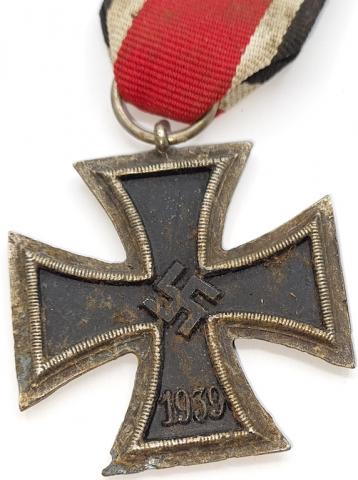
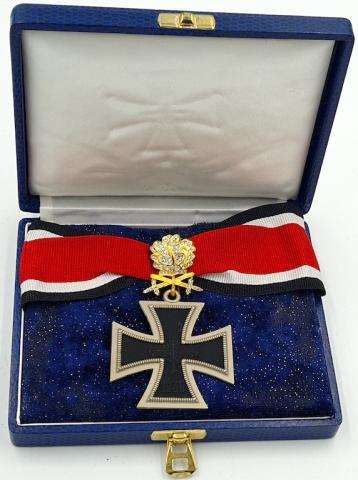
Post war 1957 Veteran knight cross of the iron cross medal award with diamond gold oakleaf in case

1957 knight cross of the iron cross medal award diamond gold oakleaf case

Post war 1957 Veteran knight cross of the iron cross medal award with diamond gold oakleaf in case

$225.00

Product

Post war 1957 Veteran knight cross of the iron cross medal award with diamond gold oakleaf in case

an amazing 1957 knight cross of the iron cross medal with diamond gold oakleaf and large ribbon, in original case of issue.
given to a veteran of the war in 1957.

rare to find!

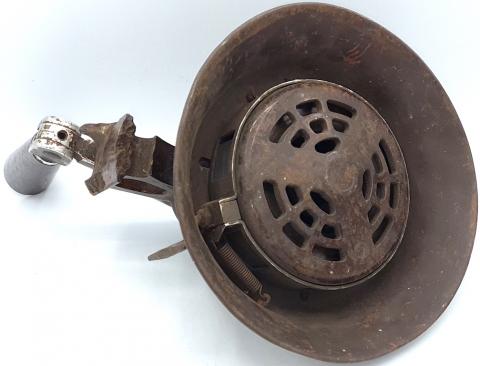
WW2 GERMAN NAZI RARE 1939 AIR ATTACK HAND OPERATED SIREN WORKING CONDITION LUFTWAFFE ALARM

WW2 GERMAN NAZI AIR ATTACK HAND OPERATED SIREN LUFTWAFFE ALARM

WW2 GERMAN NAZI RARE 1939 AIR ATTACK HAND OPERATED SIREN WORKING CONDITION LUFTWAFFE ALARM

$495.00

Product

WW2 GERMAN NAZI RARE AIR ATTACK HAND OPERATED SIREN WORKING CONDITION ALARM LUFTWAFFE ALARM

made in 1939, this is a world war 2 german hand-crank siren. it has a sound damper and the chopper, stator and handle are made of bakelite. it still functions by emitting a classic air raid siren screech when cranked. the reverse is maker marked jurk, 1939. this is a very rare hard to find piece offered in fully operational condition.

it's an amazing item to show your friend and make the alarm screen at your parties :)

this is not the cheap bakelite version that we find on the internet sold out for 900$...this is way better...

it's hard to crank, you need strong person...

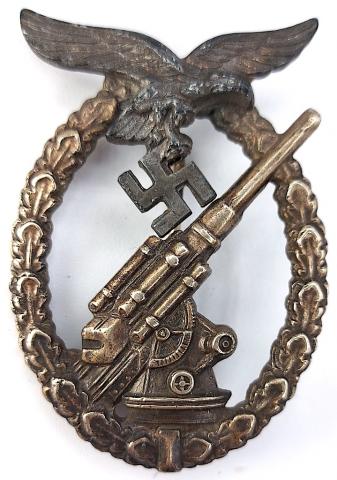
Amazing early Luftwaffe FLAK badge medal award by C.E. Juncker, Berlin

type 1 3 early Luftwaffe FLAK badge medal award C.E. Juncker, Berlin for sale

Amazing early Luftwaffe FLAK badge medal award by C.E. Juncker, Berlin

$475.00

Product

Amazing Luftwaffe FLAK badge medal award by C.E. Juncker, Berlin

Early Juncker Luftwaffe Flak Badge made out of nickel silver. The reverse of the badge is stamped with the manufacturers makers mark “C.E. Juncker, Berlin SW The Flak badge itself is made out of a material that collectors refer to as nickel silver or “buntmetall”. The badge was die struck, then neatly finished with hand filing on the edges. These file marks are still very evident upon closer inspection. A brass barrel tube was soldered in place on the reverse then a saw was used to cut the center area out to allow the tube the pin was attached to, to seat neatly in place. A pin was installed to fasten the two together and the hinge was complete. A simple brass wire was bent to form a “C” and then directly soldered to the reverse of the badge. The construction used on this badge is very characteristic of earlier Juncker produced badges. The badge was then finished with a darkened “altsilber” finish to give it the look of tarnished silver. This badge is in mint condition and cannot be upgraded. It would be a front and center example in any collection.

Historical Description: The Luftwaffe Flak Badge was instituted on 10th January, 1941. The original design, an Eagle clutching a swatika flying above a raised 88mm gun emplacement and surrounded by an oakleave wreath, is credited to Wilhelm Ernst Peekhaus, a famous German architect whose designs were favored by the German OKW and used for many other combat and qualification awards. The criteria for the awarding of the Luftwaffe Flak Badge was based upon a points system. Points were given for the downing of enemy aircraft and the assistance of the downing of aircraft by searchlight or spotting units. After accruing 16 points, the badge would be awarded. Both officers and enlisted personnel were eligible for the award.

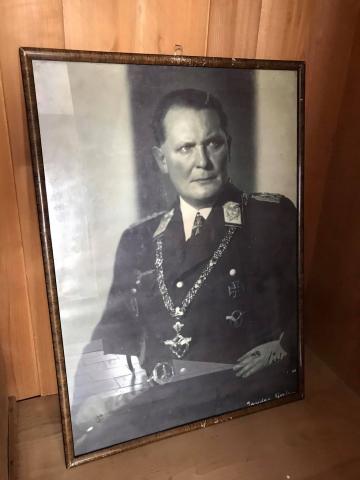
UNIQUE AUTOGRAPH SIGNATURE OF HERMANN GOERING PHOTO FRAME SIGNED goring ORIGINAL WAR PERIOD

AUTOGRAPH SIGNATURE HERMANN GOERING goring PHOTO FRAME SIGNED ORIGINAL for sale

UNIQUE AUTOGRAPH SIGNATURE OF HERMANN GOERING PHOTO FRAME SIGNED goring ORIGINAL WAR PERIOD

$895.00

Product

UNIQUE AUTOGRAPH SIGNATURE OF HERMANN GOERING PHOTO FRAME SIGNED

ORIGINAL WAR PERIOD PHOTO FRAME, LARGE SIZE OF HERMANN GORING
WITH HIS ORIGINAL SIGNATURE ON IT ALONG WITH THE SIGNATURE OF THE AUTHOR OR PHOTOGRAPH...

THIS IS AN AMAZING CENTERPIECE IN A DISPLAY !

size: Dimensions 70 x 50 cm.

**** i will have to add 60$ of shipping cause it's very large.

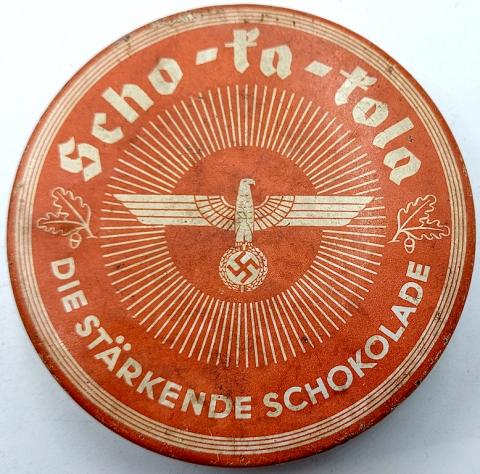
SCHO-KA-KOLA TIN CAN WITH THE THIRD REICH EAGLE - PERVITIN CRYSTAL METH DRUGS

SCHO-KA-KOLA TIN CAN WITH THE THIRD REICH EAGLE - PERVITIN CRYSTAL METH DRUGS

SCHO-KA-KOLA TIN CAN WITH THE THIRD REICH EAGLE - PERVITIN CRYSTAL METH DRUGS

$425.00

Product

SCHO-KA-KOLA TIN CAN WITH THE THIRD REICH EAGLE - PERVITIN CRYSTAL METH DRUGS

THE BEST OF THEM ALL, THE ONE WITH THE REICH EAGLE.
AMAZING CONDITION, FROM THE WELHELM FELSCHE FABRIK

EXTREMELY RARE TO FIND, AMAZING PIECE OF HISTORY !
NO ONE HAVE ONE FOR SALE, THIS IS YOUR CHANCE !

Scho-ka-kola is a chocolate spiced with caffeine, pervitin and methamphetamine. It was commonly used by the Wehrmacht and SS and was also known as pilot chocolate or something since pilots would eat this to stay hydrated woke and energized.

In World War II, Scho-Ka-Kola was colloquially known as the "Aviator Chocolate" (German Fliegerschokolade), as it was commonly provided with Luftwaffe pilot and crew rations, to induce or extend wakefulness and alertness, especially on night-bombing missions, and was also issued to flight-crews in blue canisters as emergency sea-survival rations (German Seenotpackung).

Original retail canister in 1941, scho-ka-kola printed in lowercase Fraktur calligraphy.
Scho-Ka-Kola was also issued during World War II to German tank crews, as well as German U-boat crews and the German Army. During the occupation period it was also distributed to the German population by the Allies. German Wehrmacht-issue Scho-Ka-Kola were designated 'Wehrmacht Packung' on the container underside, issued in either the metal tin or cardboard container version.

Scho-Ka-Kola is mentioned three times in Johann Voss's World War II autobiography, Black Edelweiss. "Johann Voss", real name unknown, joins the Waffen-SS in 1943 at only 17. He ends up in Northern Finland as an SS mountain ranger, and participates in heavy fighting against the Russians. When things go particularly bad, round tin boxes of Scho-Ka-Kola are issued to the troops. He also claims that during the Battle of the Bulge (particularly, the town of Reipertsweiler, in which Voss participated in a German victory), Scho-Ka-Kola was given to captured American troops as an act of respect for their bravery. Voss details Scho-Ka-Kola in the footnotes, calling the chocolate "pure luxury" and explains that each round tin contains two discs of dark chocolate, laced with caffeine from coffee beans.
Pages

Subscribe to RSS - Luftwaffe