Concentration camp SUBCAMP AUSCHWITZ toilet wall sign LATRINE
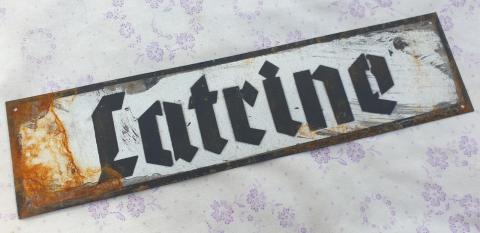
Concentration camp SUBCAMP AUSCHWITZ toilet wall sign LATRINE
$149.00
Product
Concentration camp SUBCAMP AUSCHWITZ toilet wall sign LATRINE
found on site
Empty
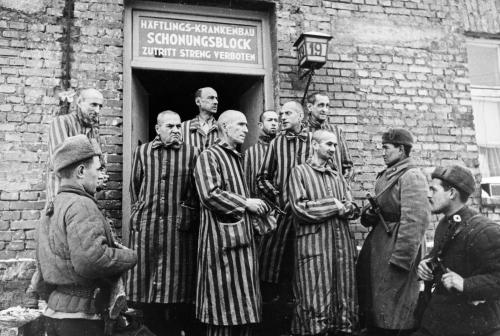
In the course of the war, the camp was staffed by 6,500 to 7,000 members of the German Schutzstaffel (SS), approximately 15 percent of whom were later convicted of war crimes. Some, including camp commandant Rudolf Höss, were executed. The Allied Powers refused to believe early reports of the atrocities at the camp, and their failure to bomb the camp or its railways remains controversial. One hundred and forty-four prisoners are known to have escaped from Auschwitz successfully, and on October 7, 1944, two Sonderkommando units—prisoners assigned to staff the gas chambers—launched a brief, unsuccessful uprising.
As Soviet troops approached Auschwitz in January 1945, most of its population was evacuated and sent on a death march. The prisoners remaining at the camp were liberated on January 27, 1945, a day now commemorated as International Holocaust Remembrance Day. In the following decades, survivors such as Primo Levi,Viktor Frankl, and Elie Wiesel wrote memoirs of their experiences in Auschwitz, and the camp became a dominant symbol of the Holocaust. In 1947, Poland founded a museum on the site of Auschwitz I and II, and in 1979, it was named a UNESCO World Heritage Site.
The ideology of Nazism brought together elements of antisemitism, racial hygiene, and eugenics, and combined them with pan-Germanism and territorial expansionism with the goal of obtaining more Lebensraum (living space) for the Germanic people.[10] Nazi Germany attempted to obtain this new territory by attacking Poland and the Soviet Union, intending to deport or kill the Jews and Slavs living there, who were viewed as being inferior to the Aryan master race.[11] After the invasion of Poland in September 1939,
German dictator Adolf Hitler ordered that the Polish leadership and intelligentsia should be destroyed.[12] Approximately 65,000 civilians were killed by the end of 1939. In addition to leaders of Polish society, the Nazis killed Jews, prostitutes, Romani, and the mentally ill.[13][14] SS-Obergruppenführer (Senior Group Leader) Reinhard Heydrich, then head of the Gestapo, ordered on September 21 that Jews should be rounded up and concentrated into cities with good rail links. Initially the intention was to deport the Jews to points further east, or possibly to Madagascar.[15]
Concentration camp SUBCAMP AUSCHWITZ toilet wall sign LATRINE
found on site

Concentration camp WAFFEN SS Totenkopf-KZ vertical collar tab SS-Hauptscharführer GUARD OFFICER skull WITH RZM TAG
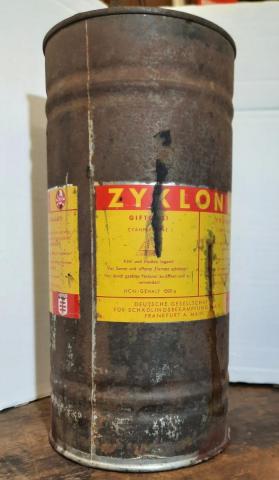
RARE WW2 Zyklon B canister poison YELLOW label gift
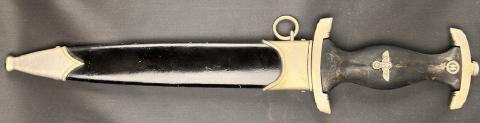
early combat anodized M33 Waffen SS dagger with district number RZM Solingen Boker Eickhorn
blade was cleaned, result: no logo visible
district number III on the lower crossguard.
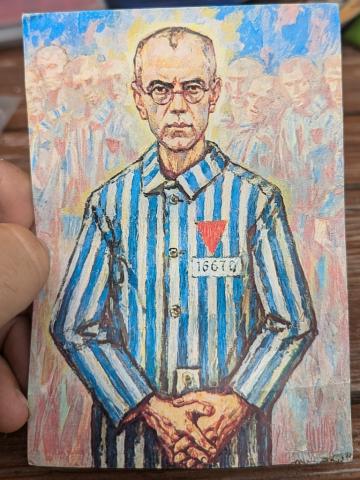
Concentration Camp AUSCHWITZ Massimiliano Kolbe inmate PRIEST who died in camp postcard
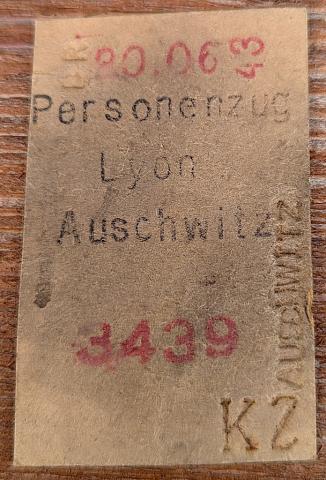
train ticket from LYON to AUSCHWITZ city - KZ concentration camp stamped 1943
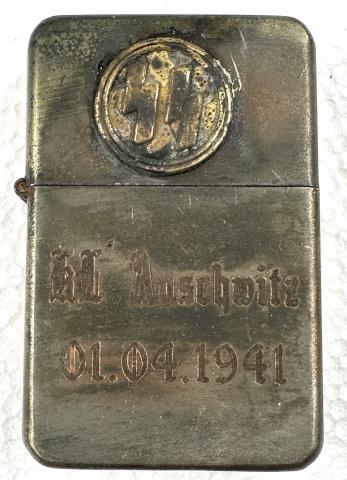
Concentration Camp AUSCHWITZ BIRKENAU WAFFEN SS Totenkopf guard commemorative zippo lighter 1941
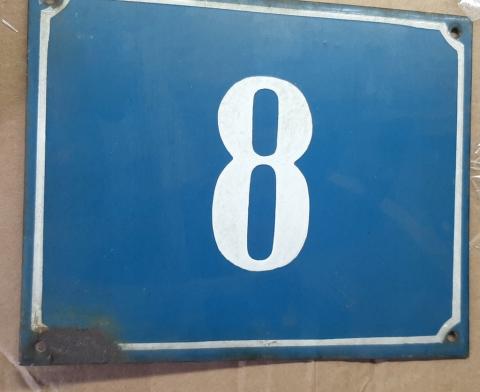
Concentration Camp BARAK number 8 metal enamel sign Holocaust KL KZ
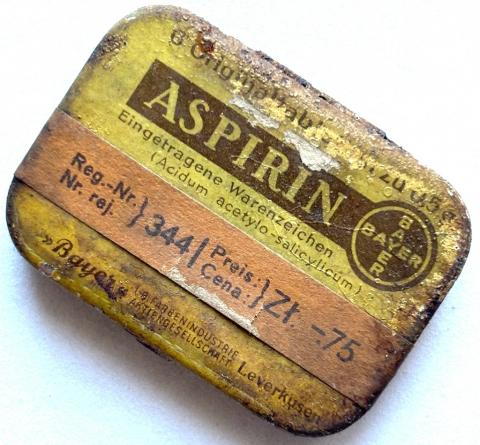
Auschwitz III Monowitz IG Farben industrie BAYER Aspirin thin can Forced labor
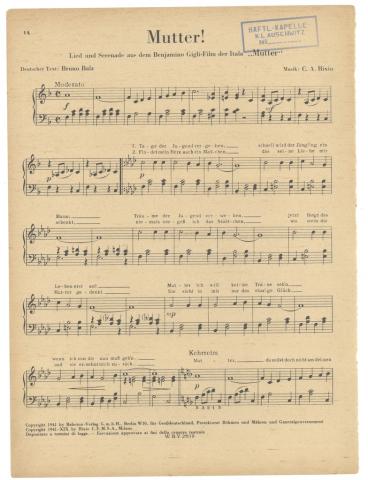
Concentration Camp AUSCHWITZ musical band inmates music sheet stamped
museum historical piece !!!
Official camp orchestras included amateur as well as professional musicians, and were ordered or tolerated by the camp administration. The first band in Auschwitz was created on SS orders in December 1940. As a result, seven musicians had their instruments (violin, percussion, double-bass, accordion, trumpet, saxophone) forwarded from their homes to the camp and began rehearsals on 6 January 1941 in Block 24 of the main camp. This ensemble grew rapidly with the permission of the camp authorities, and was divided into a symphony orchestra with up to 80 players and a brass band with about 120 musicians. Following the model of the main camp, bands were subsequently formed in the Birkenau women‘s camp, the men’s camp, the 'Gypsy' camp and the Theresienstadt family camp as well as in Monowitz and in some sub-camps. These were usually medium-sized brass bands with strings and existed for several months and even years. The orchestra in the women’s camp at Birkenau –- the only women’s camp orchestra –- has become known to a broader public through Fania Fenelon’s controversial memoirs and the related film Playing for Time.
The repertoire of prisoner bands throughout the Auschwitz camp complex included –- in addition to special camp compositions –- all forms of contemporary musical life: marches, songs, parlour music, light music, dance music, hit-tunes, film and operetta melodies, classical music and excerpts from opera, as for example, the hit tune 'The best times of my life', Ludwig van Beethoven‘s Fifth Symphony, or Henryk Krol’s 'Arbeitslagermarsch' (Concentration Camp Labour March), which was composed in Auschwitz. Each respective programme was determined above all by the interest of the camp authorities and the function allotted to each orchestra, as well as to the level of the orchestra, its personnel and its rehearsal possibilities. On the one hand, camp commandants officially created prisoner orchestras because they had seen one in another concentration camp, and thus also wanted to have their 'own' prisoner band, for the sake of prestige as well as enthusiasm for culture. On the other hand, camp administrations could employ an ensemble in numerous ways in daily camp operations. To be sure, the support of a camp band required substantial organisational outlay, since scores, instruments and other assistance had to be obtained, rehearsal rooms provided and talented musicians and conductors identified among the prisoners. Since musicians from a camp band were usually concentrated in a special labour crew with common quarters, they enjoyed certain ‘privileges’ with respect to housing, forced labour, and rations, in comparison with other inmates. They thus were situated in the upper echelons of the prisoner hierarchy.
