Concentration Camp BARAK number 8 metal enamel sign Holocaust KL KZ
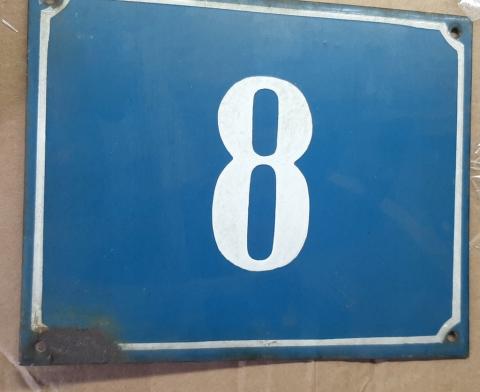
Concentration Camp BARAK number 8 metal enamel sign Holocaust KL KZ
$149.00
Product
Concentration Camp BARAK number 8 metal enamel sign Holocaust KL KZ
Empty
Concentration Camp BARAK number 8 metal enamel sign Holocaust KL KZ
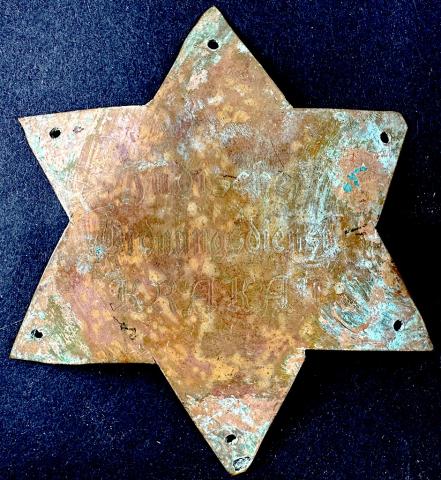
Ghetto KRAKAU wall metal STAR OF DAVID for KAPO Jew Jewish police admin RELIC
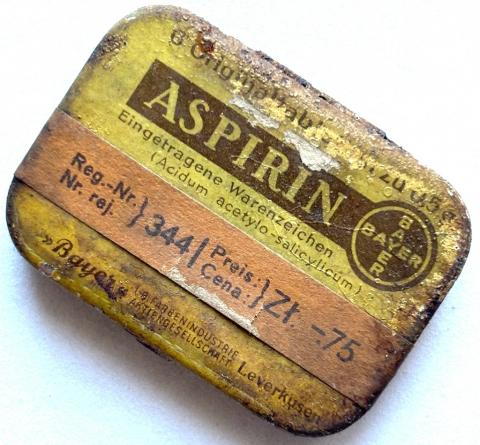
Auschwitz III Monowitz IG Farben industrie BAYER Aspirin thin can Forced labor
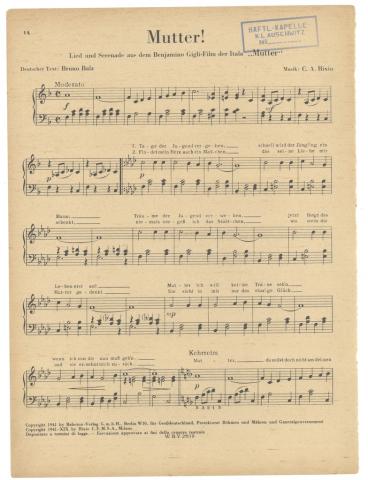
Concentration Camp AUSCHWITZ musical band inmates music sheet stamped
museum historical piece !!!
Official camp orchestras included amateur as well as professional musicians, and were ordered or tolerated by the camp administration. The first band in Auschwitz was created on SS orders in December 1940. As a result, seven musicians had their instruments (violin, percussion, double-bass, accordion, trumpet, saxophone) forwarded from their homes to the camp and began rehearsals on 6 January 1941 in Block 24 of the main camp. This ensemble grew rapidly with the permission of the camp authorities, and was divided into a symphony orchestra with up to 80 players and a brass band with about 120 musicians. Following the model of the main camp, bands were subsequently formed in the Birkenau women‘s camp, the men’s camp, the 'Gypsy' camp and the Theresienstadt family camp as well as in Monowitz and in some sub-camps. These were usually medium-sized brass bands with strings and existed for several months and even years. The orchestra in the women’s camp at Birkenau –- the only women’s camp orchestra –- has become known to a broader public through Fania Fenelon’s controversial memoirs and the related film Playing for Time.
The repertoire of prisoner bands throughout the Auschwitz camp complex included –- in addition to special camp compositions –- all forms of contemporary musical life: marches, songs, parlour music, light music, dance music, hit-tunes, film and operetta melodies, classical music and excerpts from opera, as for example, the hit tune 'The best times of my life', Ludwig van Beethoven‘s Fifth Symphony, or Henryk Krol’s 'Arbeitslagermarsch' (Concentration Camp Labour March), which was composed in Auschwitz. Each respective programme was determined above all by the interest of the camp authorities and the function allotted to each orchestra, as well as to the level of the orchestra, its personnel and its rehearsal possibilities. On the one hand, camp commandants officially created prisoner orchestras because they had seen one in another concentration camp, and thus also wanted to have their 'own' prisoner band, for the sake of prestige as well as enthusiasm for culture. On the other hand, camp administrations could employ an ensemble in numerous ways in daily camp operations. To be sure, the support of a camp band required substantial organisational outlay, since scores, instruments and other assistance had to be obtained, rehearsal rooms provided and talented musicians and conductors identified among the prisoners. Since musicians from a camp band were usually concentrated in a special labour crew with common quarters, they enjoyed certain ‘privileges’ with respect to housing, forced labour, and rations, in comparison with other inmates. They thus were situated in the upper echelons of the prisoner hierarchy.
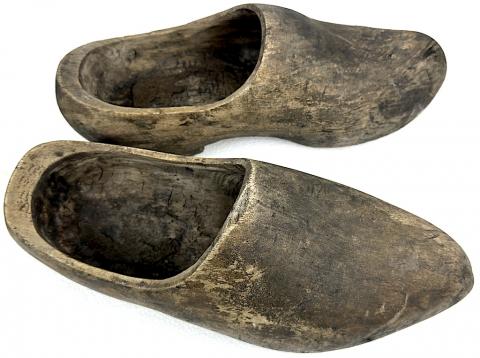
concentration camp shoes CLUGS from an inmate survivor of AUSCHWITZ BIRKENAU
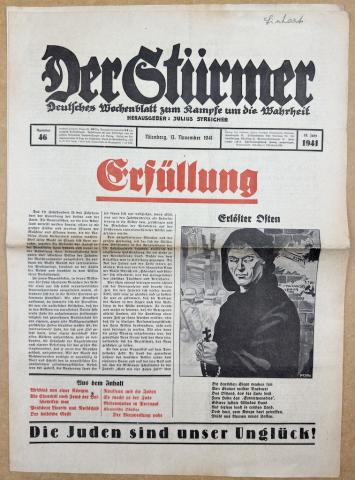
Most infamous antisemitic anti Jew Jewish Der Sturmer magazine 1941

WW2 German Nazi Ausweis Deutsches Reich Kennkarte photo ID stamped Forced Labor
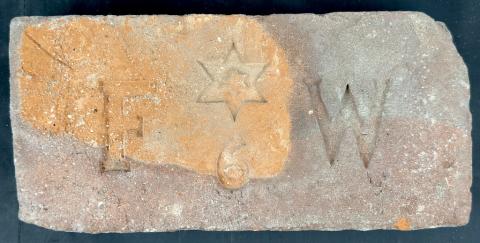
Holocaust Jewish synaguoge in Prague brick part with STAR OF DAVID from demolition
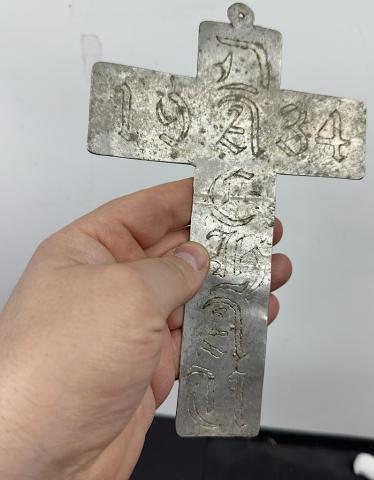
Concentration Camp DACHAU inmate handmade cross early 1934 PRIEST
museum piece !
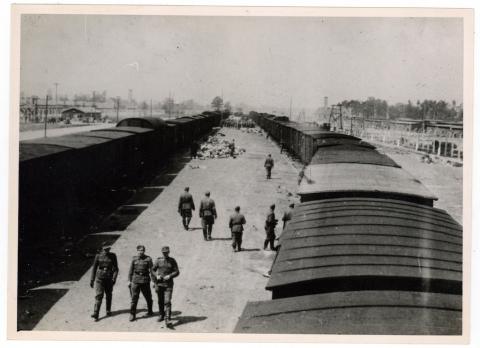
Concentration Camp AUSCHWITZ BIRKENAU original photo taken at the liberation train corpes
i have a lot of 13 original photos taken at the liberation.
they are written on the back and dated 1947, date when they were stored to archive by the military.
18x13cm
amazing piece of holocaust history !
