SCARCE Concentration Camp KZ KL AUSCHWITZ inmate POSTCARD feldpost
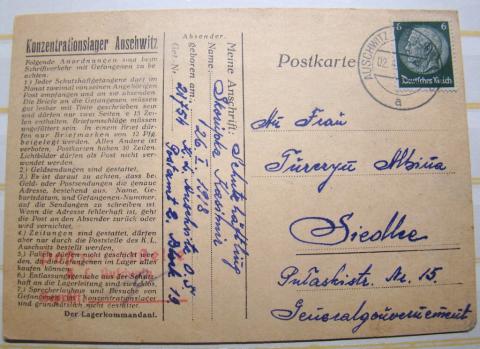
SCARCE Concentration Camp KZ KL AUSCHWITZ inmate POSTCARD feldpost
$239.00
Product
SCARCE Concentration Camp KL kz AUSCHWITZ inmate POSTCARD feldpost
Empty
SCARCE Concentration Camp KL kz AUSCHWITZ inmate POSTCARD feldpost
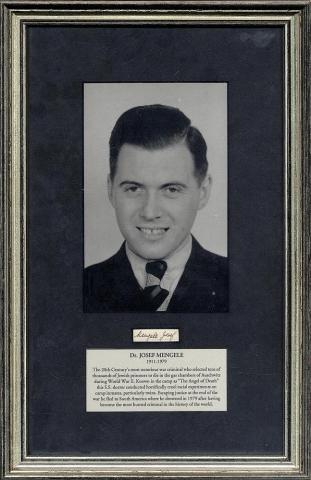
AUSCHWITZ head DOCTOR Waffen SS DOCTOR JOSEF MENGELE AUTOGRAPH hand made signature photo in frame with COA
SS DOCTOR JOSEF MENGELE AUTOGRAPH, FRAMED,
MENGELE JOSEF (1911-1979) German Nazi SS officer and physician at Auschwitz. Rare fountain pen ink signature (‘Mengele Josef’) on a small oblong piece of paper, evidently neatly cut from an official document. Matted in black beneath a 4 x 6.5 photograph of Mengele and above a brief printed biography. Framed and glazed in a silver coloured wooden frame to an overall size of 9 x 14. VG
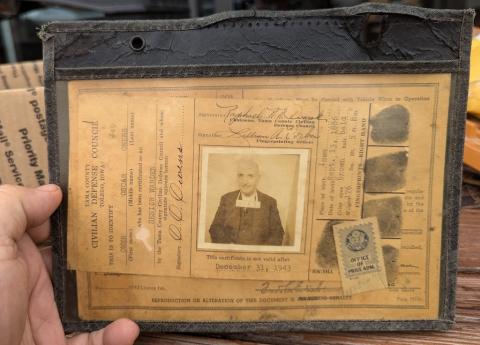
WW2 USA CIVILIAN DEFENCE COUNCIL identification papers set with photo finger prints signature for a SENIOR WARDEN Masonic Blue Lodge
an identification paper with photo, signature, finger prints
a tire verification vehicule paper
a certificate of war necessity for a vehicule
a stamp
in a leather case
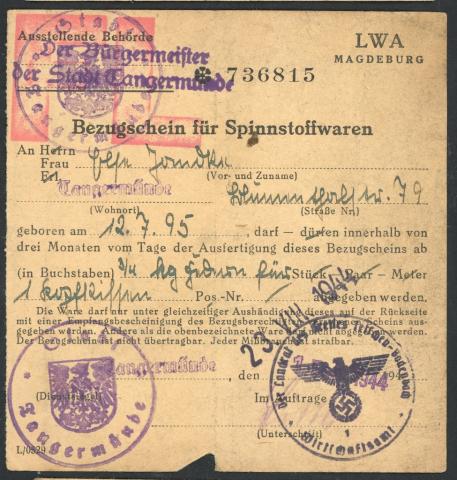
WW2 German nazi order of textile for concentration camp uniforms fabrik stamped document
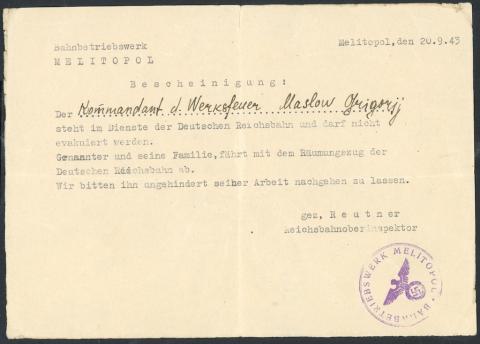
WW2 German Nazi Wehrmacht labour attestation paper train worker Bahnbetriebswerk stamped
25x21 cm
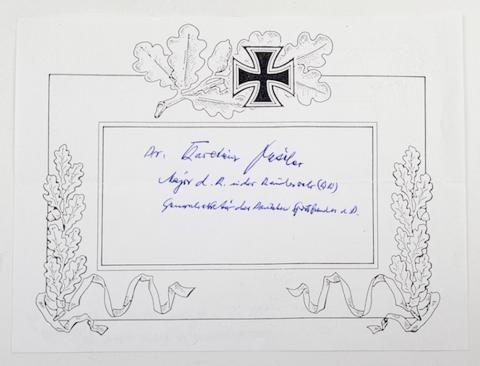
Waffen SS holder of the RK, SS-Untersturmführer Karl-Heinz Gieseler panzer div nordland hand made signature authograph card
I offer a hand-signed collector's card by a member of the Waffen SS and the holder of the RK, SS-Untersturmführer Karl-Heinz Gieseler, who served during World War II at the SS-Fallschirmjäger Btl.500, later at the 11th / SS Pz.Gren.Div. 'Nordland' and fought with Brigadeführer Mohnek for the Reich Chancellery in Berlin in April 1945. RK was awarded on April 29, 1945. Karl-Heinz Gieseler died on October 17, 2010. The signature was obtained by personal correspondence. The card is translated from a letter in the middle.
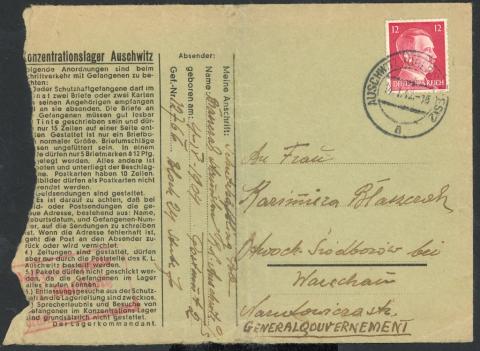
Concentration camp AUSCHWITZ feldpost letter enveloppe sent to GENERALGOVERNMENT
enveloppe only
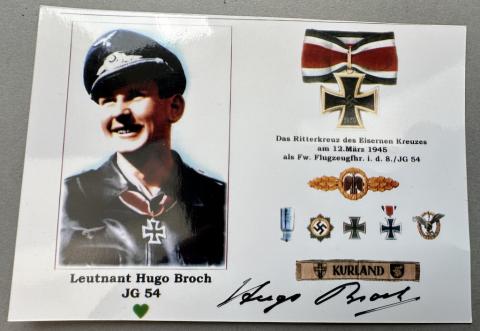
LUFTWAFFE ace pilot Hugo Broch hand made signature autograph Knight's Cross of the Iron Cross recipient
Hugo Broch (born 6 January 1922) is a German Luftwaffe ace during the Second World War who is credited with 81 victories in 324 missions, all on the Eastern Front. He is a recipient of the Knight's Cross of the Iron Cross, and is one of two living recipients of the award.
World War II
Broch is a World War II Luftwaffe pilot.[2] In January 1943 he arrived on the Eastern Front to serve in II. Gruppe of Jagdgeschwader 54 (JG 54—54th Fighter Wing), and claimed his first victory two months later.
Later life
Following World War II, Broch became an employee with Agfa in Leverkusen. He was a prolific autograph signer, and signed many memorabilia items.[5][6] At age 95 he fulfilled a long held ambition to fly in a Spitfire, the two seat Tr.9 MJ627. On 6 January 2022, he turned 100 years old, making him a centenarian.
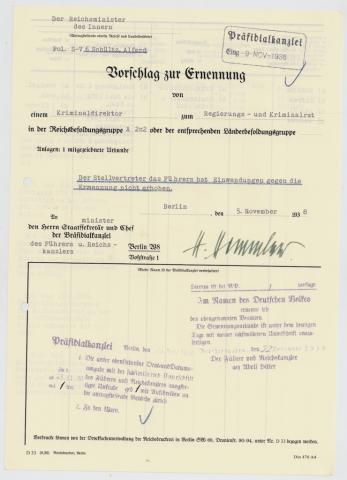
WW2 GERMAN NAZI ORIGINAL WAFFEN SS 2 PAGES PROMOTION DOCUMENT SIGNED BY HEINRICH HIMMLER 100% ORIGINAL AUTOGRAPH SIGNATURE
a HIMMLER signature SELLS FOR over 1500$
THEY ARE RARE BUT SOME ARE NOW ON SALE ON THE INTERNET
IT'S NOT A FAC-SIMILÉ SIGNATURE, IT'S A REAL ONE, HAND MADE...
IT'S A 2 PAGES DOCUMENT ABOUT A PROMOTION FOR A WAFFEN SS SOLDIER.
PRICED TO SELL FAST !!
MUSEUM PIECE, PERFECT TO FRAME!
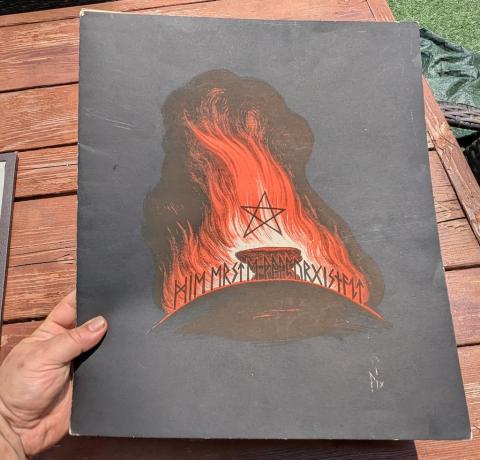
CREATION OF THE WAFFEN SS by HIMMLER - large BOOK with ORIGINAL HEINRICH HIMMLER HANDMADE SIGNATURE with COA
comes with a hard cover flip protective pouch
WHERE IT ALL BEGAN!!
When Himmler created the SS and all that comes around (the old runes, the basic provenance) it took his inspiration from that book!
only 350 were made, i am pretty sure less than 5 still exists !!
and you have on the first page, an amazing HANDMADE original signature of HIMMLER!
this is a top museum quality stuff!
it comes with a valid certificate of authenticity for the signature.
also comes with a hard cover flip protection with a silver third reich eagle on it.
Die erste Walpurgisnacht
The First Walpurgis Night / by Johann Wolfgang von Goethe. Drawn on stone by Otto Pech, Altenburg. [Accompanying text: Pix] ; Lithograph by the Kunstanstalt vorm. Schneider u. Co. Altenburg i. Trier
Title: The first Walpurgis Night / by Johann ...
Publisher: Bad Harzburg
Publication date: 1924
Cover: 41 x 35 cm [folder]
Condition: Very good
Edition: 350 copies
about the book :
Mendelssohn's Die erste Walpurgisnacht (The First Walpurgis Night) , based on a text by Goethe, is a work fraught with ambiguities and paradoxes. It is a major work by the composer that should not be overlooked in any serious discussion of Mendelssohn's life and work. Nevertheless, the piece has never been published in a source-critical edition. The first editions, carefully curated by Mendelssohn himself, were replaced by others that gradually corrupted the musical text of the work.
we know Walpurgis Night as a nightly spring feast based on the more or less fantastical notion of a witches' sabbath. In mythology and history, it is also closely associated with the peak of the Brocken, the highest mountain in the Harz Mountains. Today's concertgoers are generally unaware that for Goethe, Mendelssohn, and their contemporaries, that night was a predetermined celebration, evoking centuries of strife, conflict, mystery, and violence. Essentially, it was about religious intolerance and the murky boundaries between the natural and the supernatural, the boundaries between certainties and what we cannot know.
The genesis of Mendelssohn's cantata can essentially be divided into two periods. The first, spanning the years 1830 to 1833, produced a complete musical setting, which premiered successfully in Berlin under the composer's direction and was initially intended for publication but ultimately not. During the later 1830s, Mendelssohn became increasingly dissatisfied with this setting, and after 1840 he revised the work again. The revisions developed a life of their own, becoming increasingly extensive the more attention the composer devoted to the project. Subsequently, the revisions that the revised version had undergone before the premiere in February 1843 were expanded even further while the printing of the piano reduction was in preparation. Between the publication of the piano reduction in late 1843 and the printing of the score in the spring of 1844, further substantial changes were made.
"(In the last days of paganism in Germany, Christians forbade Druid sacrifices under penalty of death. Despite this, the Druids and the people sought to conquer the mountain heights at the beginning of spring, offer their sacrifices there, and intimidate and drive away the Christian warriors (usually through their fear of the devil). The legend of the first Walpurgis Night is said to be based on such attempts.)"
It will come as no surprise to anyone familiar with Mendelssohn's self-critical attitude and his tendency to withhold many important compositions that "The First Walpurgis Night" also underwent numerous revisions between its premiere and publication. More surprising, however, is that in the published score, the composer replaced the introduction with an excerpt from a letter from Goethe dated September 9, 1831. In doing so, he weakened the literary-historical subject of the work in favor of a more overarching symbolism. The new introduction reads:
"For it must continually repeat itself in world history that something old, established, tested, and reassuring is pushed, pushed, displaced, and, if not eradicated, at least crammed into the narrowest possible space by emerging innovations. The middle period, when hatred can and may still counteract, is portrayed here succinctly enough, and a joyful, indestructible enthusiasm flares up once more in splendor and clarity. You have certainly given life and meaning to all this, and so may it also flourish for my joyful enjoyment."
