Empty

Total: $0.00

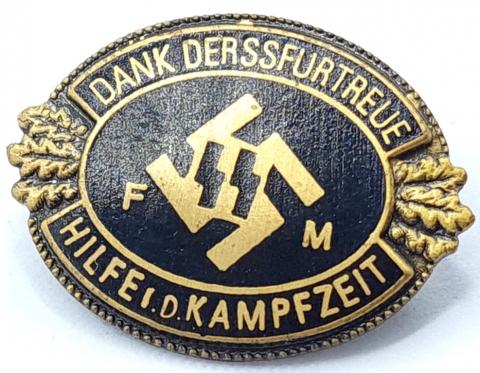
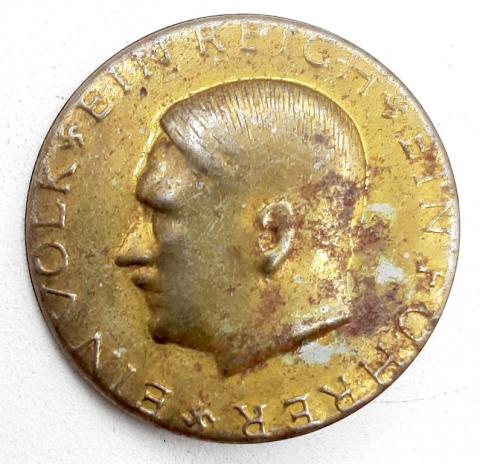
EARLY 1930S ADOLF HITLER ELECTION PARTISAN PIN THIRD REICH FUHRER

EARLY 1930S ADOLF HITLER ELECTION PARTISAN PIN THIRD REICH FUHRER

EARLY 1930S ADOLF HITLER ELECTION PARTISAN PIN THIRD REICH FUHRER

$65.00

Product

EARLY 1930S ADOLF HITLER ELECTION PARTISAN PIN THIRD REICH FUHRER

In the federal election of July 1932, the Nazis won 37.3% of the popular vote (13,745,000 votes), an upswing by 19 percent, becoming the largest party in the Reichstag, with 230 out of 608 seats. Dwarfed by Hitler's electoral gains, the KPD turned away from legal means and increasingly towards violence.

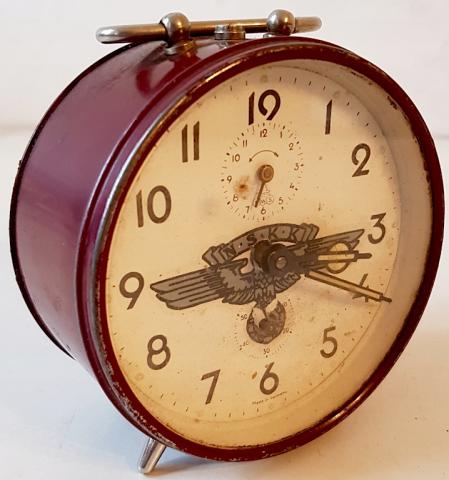
NSKK N.S.K.K MOTORCYCLE CLUB THIRD REICH ALARM CLOCK WITH LOGO

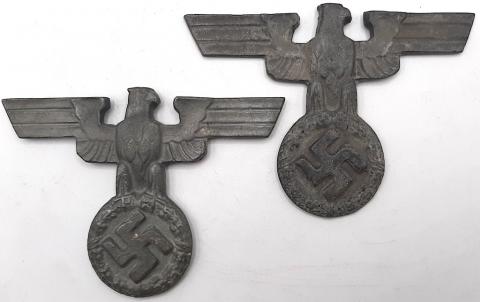
NSKK N.S.K.K MOTORCYCLE CLUB THIRD REICH ALARM CLOCK WITH LOGO

NSKK N.S.K.K MOTORCYCLE CLUB THIRD REICH ALARM CLOCK WITH LOGO

$225.00

Product

NSKK N.S.K.K MOTORCYCLE CLUB THIRD REICH ALARM CLOCK WITH LOGO

Sometime in August 1938, the NSKK began its services as a courier for Organization Todt (OT) during the construction of the Westwall. Members of the NSKK transported classified documents, important reports and announcements, construction plans, and routine papers to and from the organization's headquarters. Exemplary services provided to the Organization Todt resulted in Hühnlein being given oversight for the transportation needs related to the task. Over 15,000 trucks went into operation, delivering building materials to the 22,000 individual construction sites of the Westwall. Daily movements of the 200,000 workers required over 5,000 buses to get the workers to and from the construction sites.

Concomitant to the support provided to Organization Todt during the construction of the Westwall by the NSKK, the organization was also tasked by Hitler's chief architect, Albert Speer. He founded a unit known as the "Transport Brigade Speer", which was organized under the auspices of military considerations, dividing them accordingly into regiments, divisions, companies and platoons. On 27 January 1939, Hitler made the NSKK the sole authority for motor-vehicle related military training. Shortly thereafter, the NSKK was divided into 5 main groups and 23 subordinate motor groups. Approximate manpower strength of the NSKK reached nearly half a million men at this stage with its leadership operating primarily out of Munich and Berlin.

With the outbreak of World War II in Europe on 1 September 1939, the National Socialist Motor Corps became a target for army recruitment, since NSKK members possessed knowledge of motorized transport, a coveted skill when the bulk of German ground forces relied on horses. The NSKK was used to transport German Army troops, supplies and ammunition. By the time the Second World War began, the NSKK had already trained some 200,000 men at its 21 training facilities.

During field operations in the Eastern Front, the NSKK members of the Transport Brigade Speer followed Army Group South, providing infrastructural backup and replenishment. Members of the Transport Brigade Speer wore either the gray-blue uniform of the Luftwaffe or the brown uniform of Speer's staff. NSKK men working for Organization Todt became members of the "NSKK Transport Brigade Todt", which were further divided into individual motor groups in the occupied territories.

Major units of the NSKK were formed by 1944, operating throughout Germany. There were two full brigades of the NSKK supporting the Luftwaffe; a Motorobergruppe Alpenland in the Austrian Alps; Motorobergruppe Mitte (middle) which operated in Berlin, Franconia, and the Lower Rhine; Motorobergruppe Nord (north) that covered Hamburg, Lower Saxony, the Baltic Sea and Schleswig-Holstein; Motorobergruppe Nordost (northeast) in Danzig, East Prussia, and Wartheland; Motorobergruppe Ost (east) for Leipzig, Lower and Upper Silesia; Motorobergruppe Süd (south) which served Bavaria and Hochland; Motorobergruppe Südwest (southwest) for the Rhine-Moselle, and Swabian regions; Motorobergruppe Südost (southeast) covering the Upper and Lower Danube, Sudetenland; and Motorobergruppe West (west) which was responsible for Hessen, Thuringia, and Westphalia. Moreover, there were also NSKK units assigned to Organization Todt, operating in France, Italy and Russia. Historian Peter Longerich suggests that members of the NSKK along with the para-military police, the Waffen-SS, and the German Army were all culpable in varying degrees for large-scale arrests, torture, and mass executions.
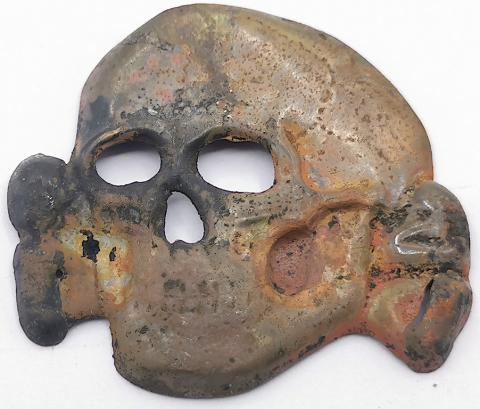
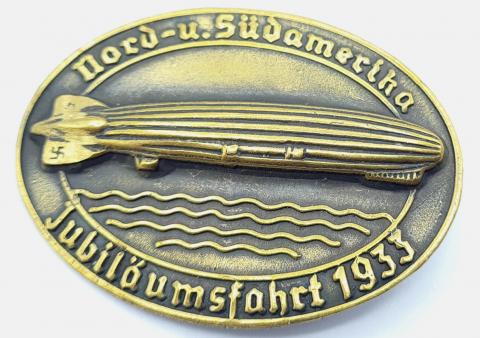
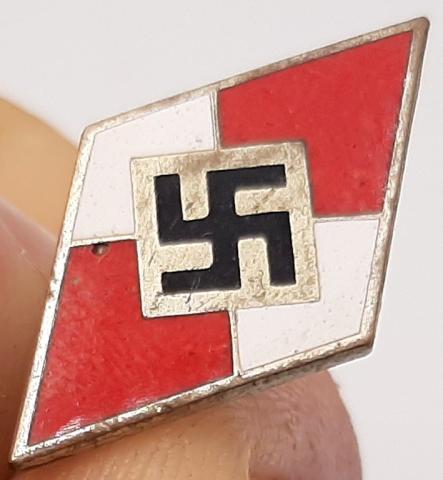
NICE NSDAP THIRD REICH HITLER PARTY POLITICAL MEMBERSHIP PIN BY RZM M1/129

NICE NSDAP THIRD REICH HITLER PARTY POLITICAL MEMBERSHIP PIN BY RZM M1/129

NICE NSDAP THIRD REICH HITLER PARTY POLITICAL MEMBERSHIP PIN BY RZM M1/129

$110.00

Product

NICE NSDAP THIRD REICH HITLER PARTY POLITICAL MEMBERSHIP PIN BY RZM M1/129

The Nazi Party,[a] officially the National Socialist German Workers' Party (Nationalsozialistische Deutsche Arbeiterpartei or NSDAP), was a far-right political party in Germany active between 1920 and 1945, that created and supported the ideology of Nazism. Its precursor, the German Workers' Party (Deutsche Arbeiterpartei; DAP), existed from 1919 to 1920. The Nazi Party emerged from the German nationalist, racist and populist Freikorps paramilitary culture, which fought against the communist uprisings in post-World War I Germany. The party was created to draw workers away from communism and into völkisch nationalism. Initially, Nazi political strategy focused on anti-big business, anti-bourgeois, and anti-capitalist rhetoric, although this was later downplayed to gain the support of business leaders, and in the 1930s the party's main focus shifted to antisemitic and anti-Marxist themes.

Pseudoscientific racist theories were central to Nazism, expressed in the idea of a "people's community" (Volksgemeinschaft). The party aimed to unite "racially desirable" Germans as national comrades, while excluding those deemed either to be political dissidents, physically or intellectually inferior, or of a foreign race (Fremdvölkische). The Nazis sought to strengthen the Germanic people, the "Aryan master race", through racial purity and eugenics, broad social welfare programs, and a collective subordination of individual rights, which could be sacrificed for the good of the state on behalf of the people. To protect the supposed purity and strength of the Aryan race, the Nazis sought to exterminate Jews, Romani, Poles and most other Slavs, along with the physically and mentally disabled. They disenfranchised and segregated homosexuals, Africans, Jehovah's Witnesses, and political opponents.[14] The persecution reached its climax when the party-controlled German state set in motion the Final Solution—an industrial system of genocide which achieved the murder of around 6 million Jews and millions of other targeted victims, in what has become known as the Holocaust.

Adolf Hitler, the party's leader since 1921, was appointed Chancellor of Germany by President Paul von Hindenburg on 30 January 1933. Hitler rapidly established a totalitarian regime known as the Third Reich. Following the defeat of the Third Reich at the conclusion of World War II in Europe, the party was "declared to be illegal" by the Allied powers, who carried out denazification in the years after the war both in Germany and in territories occupied by Nazi forces. The use of any symbols associated with the party is now outlawed in many European countries, including Germany and Austria.

Pages

Subscribe to RSS - Insignia & pins