WW2 German Nazi relic found zippo lighter HERMANN GOERING hunting club by RZM
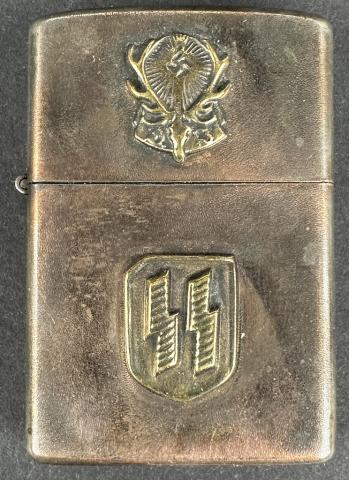
WW2 German Nazi relic found zippo lighter HERMANN GOERING hunting club by RZM
$279.00
Product
WW2 German Nazi relic found zippo lighter HERMANN GOERING hunting club by RZM
Empty
WW2 German Nazi relic found zippo lighter HERMANN GOERING hunting club by RZM

Hermann Goering personnal home Carinhall Hunting Club leaders car pennant flag with hanger
AMAZING PIECE OF HISTORY
FROM THE house keeper family of CARINHALL estate directly.
probably this flag was on one of the GORING CAR!!!!
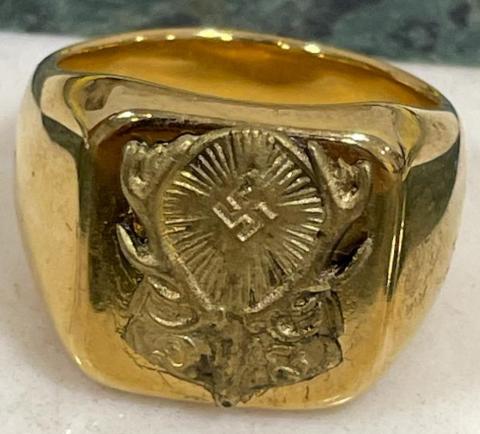
HERMANN GOERING CARINHALL SITE FOUND GOLDEN GOLD RING hunting club personal ring
found on site in the 80s. could be GORING personal ring or for sure it was ownsed by a high rank SS or NSDAP officer
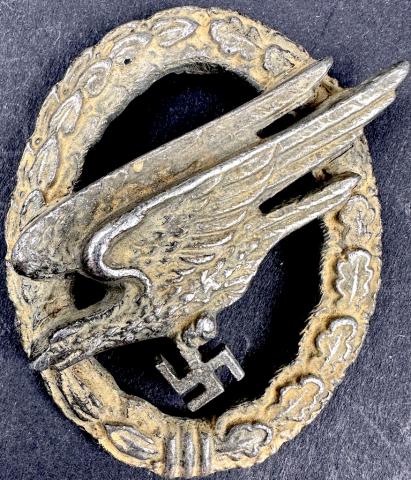
luftwaffe Fallschirmschutzenabzeichen paratrooper badge medal award LW
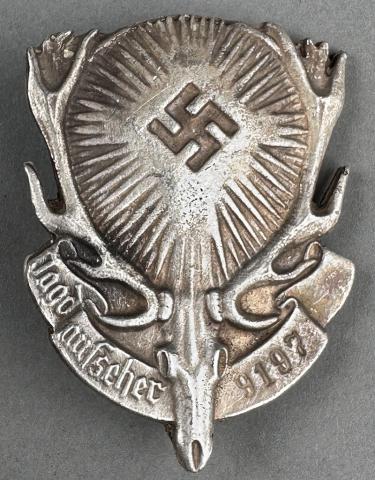
WW2 German Nazi CARINHALL HERMANN GOERING hunting club pin badge
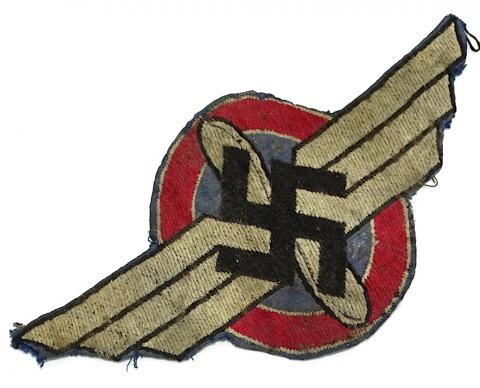
WW2 German Nazi RARE Third Reich Deutscher Luftsportverband Abzeichen (DLV) patch
The German Air Sports Association (Deutscher Luftsportverband, or DLV e. V.) was an organisation set up by the Nazi Party in March 1933 to establish a uniform basis for the training of military pilots. Its chairman was Hermann Göring and its vice-chairman Ernst Röhm.
Since the Treaty of Versailles officially forbade Germany from building fighter planes of any sort, the German Air Sports Association used gliders to train men still officially civilians for the future Luftwaffe.[1] The first steps towards the Luftwaffe's formation were undertaken just months after Adolf Hitler came to power. Hermann Göring, a World War I ace with 22 victories and the holder of the Orden Pour le Mérite, became National Kommissar for aviation with former Deutsche Luft Hansa director Erhard Milch as his deputy. On 25 March 1933 the German Air Sports Association absorbed all private and national organizations, whilst retaining its 'sports' title. In April 1933 the Reichsluftfahrtministerium (RLM – Reich Air Ministry) was established. The RLM was in charge of development and production of aircraft, and soon afterwards the test site or Erprobungsstelle at Rechlin became its testing ground, a military airfield that had been first established in August 1918. Göring's control over all aspects of aviation became absolute, with the exception of gliders and balloons over which Milch had control as deputy kommissar because Goring’s weight prevented him from flying in either.
The German Air Sports Association was dissolved in 1937 and replaced with the National Socialist Flyers Corps, a corporation under public law and subordinate to Reichsluftfahrtminister Göring.
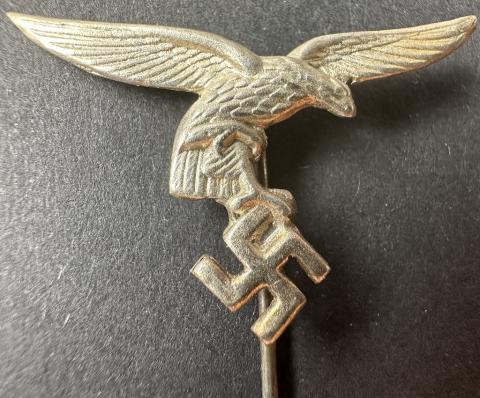
WW2 German Nazi Luftwaffe stickpin pilot LW Hermann Goering patriotic
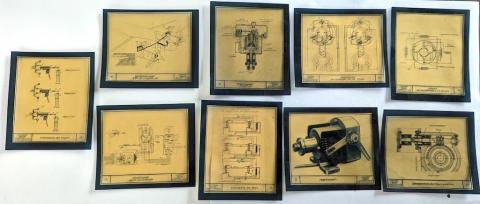
WW2 German Nazi LUFTWAFFE aircraft engineer schemas lot of 9

WW2 German Nazi HERMANN GOERING CARINHALL HOUSE ESTATE hunting club ink pot
puchased at the estate of CARINHALL (H Goring house) of the house keeper relatives.
amazing piece of history, may be worn by Goering itself, we cannot know - but it was in his house.
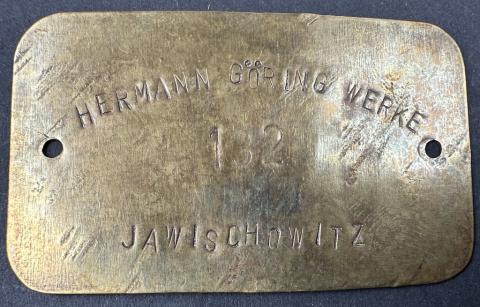
Reichswerke Hermann Goring metal ID plate forced labour werke mining
Reichswerke Hermann Göring ("Hermann Göring Reich Works") was an industrial conglomerate in Nazi Germany from 1937 until 1945. It was established to extract and process domestic iron ores from Salzgitter that were deemed uneconomical by the privately held steel mills. The state-owned Reichswerke was seen as a vehicle of hastening growth in ore mining and steel output regardless of private capitalists' plans and opinions, which ran in alignment to Adolf Hitler's strategic and economic vision. In November 1937, Reichsminister of Aviation Hermann Göring obtained unchecked access to state financing and launched a chain of mergers, diversifying into military industries with the absorption of Rheinmetall. Göring himself supervised the Reichswerke but did not own it in any sense and did not make personal profit from it directly, although at times he withdrew cash for personal expenses.
After the Anschluss, the Reichswerke absorbed Austrian heavy industries, including those owned by private German investors. The cluster of steel mills and supporting companies in Linz became its most important asset. Nazi leadership regarded captured assets as the property of the state and were not willing to share the spoils with German businesses. After the German occupation of Czechoslovakia, the Reichswerke absorbed between 50 and 60 per cent of Czech heavy industries. The pattern was repeated in occupied Poland, France and the Soviet Union. The Reichswerke operated captured assets as far from its base as Liepāja in Latvia and Donetsk in eastern Ukraine. It provided one-eighth of German steel output during the Second World War[6] and created a Nazi-controlled military complex that was independent of private interests. By the end of 1941 the Reichswerke became the largest company in Europe[8] and probably in the whole world, with a capital of 2.4 billion ℛ︁ℳ︁ and about half a million workers.
In 1942 the Reichswerke's inefficient corporate structure was reduced in size. Its weapons and munitions assets were integrated into the Ministry of Armaments; the mining and steel core of the Reichswerke continued operation under Goring's supervision until the end of the war, albeit at a loss. The conglomerate was dismembered by the Allies in 1944–1945, but the Salzgitter plant continued operations as Reichswerke until 1953. The Reichswerke logo, which resembled Göring's coat of arms, remained in use by Peine+Salzgitter until the middle of the 1980s.
