Empty

Total: $0.00

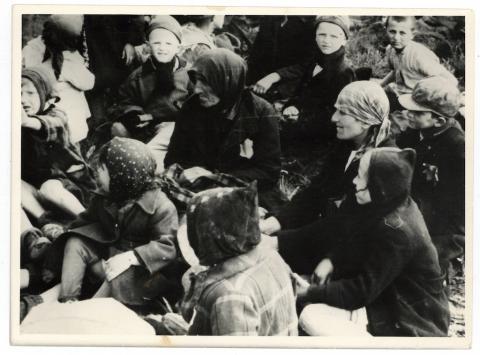
Concentration Camp AUSCHWITZ BIRKENAU original photo taken at the liberation NEW train arrival GHETTO DEPORTED JEWISH JEW

Concentration Camp AUSCHWITZ BIRKENAU original photo GHETTO DEPORTED JEWISH JEW

Concentration Camp AUSCHWITZ BIRKENAU original photo taken at the liberation NEW train arrival GHETTO DEPORTED JEWISH JEW

$65.00

Product

Concentration Camp AUSCHWITZ BIRKENAU original photo taken at the liberation NEW train arrival GHETTO DEPORTED JEWISH JEW

i have a lot of 13 original photos taken at the liberation.
they are written on the back and dated 1947, date when they were stored to archive by the military.

18x13cm

amazing piece of holocaust history !

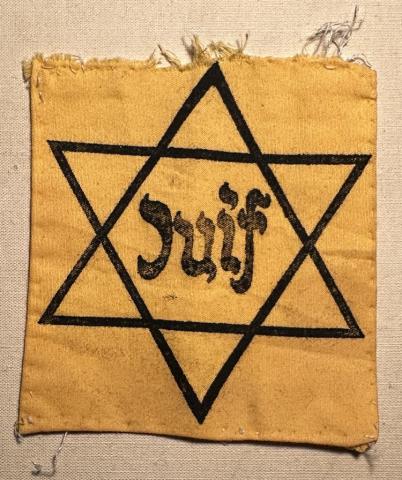
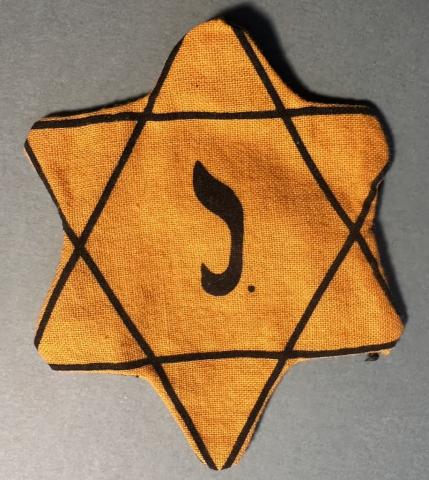
BELGIUM J. STAR OF DAVID WORN with back fabrik Holocaust Jew Jewish SCARCE

BELGIUM J. STAR OF DAVID WORN original genuine Holocaust Jew Jewish SCARCE

BELGIUM J. STAR OF DAVID WORN with back fabrik Holocaust Jew Jewish SCARCE

$1,495.00

Product

BELGIUM J. STAR OF DAVID WORN with back fabrik Holocaust Jew Jewish SCARCE

The Star of David originated long before it was adopted by the Jewish faith and the Zionist movement; it appeared thousands of years ago in the cultures of the East, cultures that use it to this day. In the past, what we know today as the Star of David was a popular symbol in pagan traditions, as well as a decorative device used in first-century churches and even in Muslim culture.

But how is the Star of David tied to the fate of the Jewish people?

In the Hebrew context, the Star of David is actually referred to as the “Shield of David” (magen David), a phrase first mentioned in the Babylonian Talmud, not as a symbol, but as an epithet for God [Pesachim 117b]. Another link to the shield concept is a Jewish legend according to which the emblem decorated the shields of King David’s army; what’s more, even Rabbi Akiva chose the Star of David as the symbol of Bar-Kochba’s revolt against the Roman emperor Hadrian (Bar-Kochba’s name means “son of the star”).

The Star of David only became a distinctly Jewish symbol in the mid-14th century, when the Holy Roman Emperor Charles IV granted the Jews of Prague the right to carry a flag, and they chose the six-pointed star. From Prague, the use of the Star of David as an official Jewish symbol spread, and so began the movement to find Jewish sources that traced the symbol to the House of David.
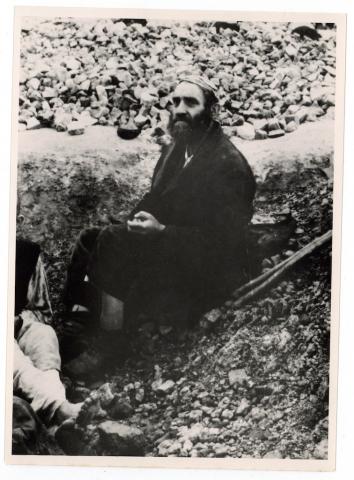
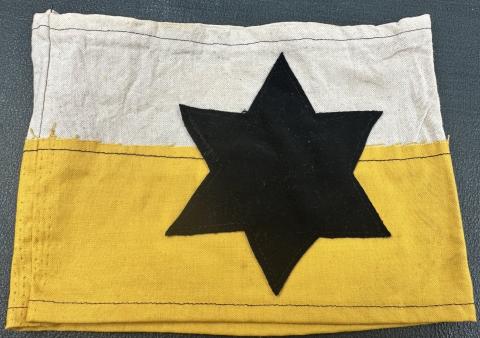
Concentration Camp AUSCHWITZ BIRKENAU original photo taken at the liberation NEW train arrival GHETTO DEPORTED JEWISH GYPSIES star of david

Concentration Camp AUSCHWITZ BIRKENAU original photo GHETTO DEPORTED JEWISH GYPSIES star of david

Concentration Camp AUSCHWITZ BIRKENAU original photo taken at the liberation NEW train arrival GHETTO DEPORTED JEWISH GYPSIES star of david

$65.00

Product

Concentration Camp AUSCHWITZ BIRKENAU original photo taken at the liberation NEW train arrival GHETTO DEPORTED JEWISH GYPSIES star of david

i have a lot of 13 original photos taken at the liberation.
they are written on the back and dated 1947, date when they were stored to archive by the military.

18x13cm

amazing piece of holocaust history !

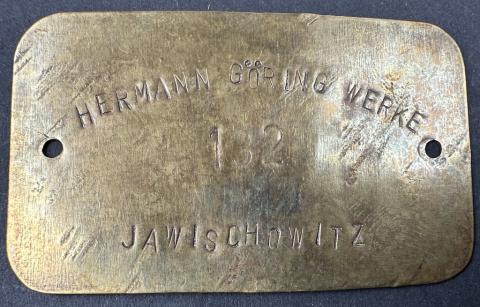
Holocaust Reichswerke Hermann Goring metal ID plate forced labour werke mining

Reichswerke Hermann Goring metal ID plate forced labour werke mining

Holocaust Reichswerke Hermann Goring metal ID plate forced labour werke mining

$85.00

Product

Reichswerke Hermann Goring metal ID plate forced labour werke mining

Reichswerke Hermann Göring ("Hermann Göring Reich Works") was an industrial conglomerate in Nazi Germany from 1937 until 1945. It was established to extract and process domestic iron ores from Salzgitter that were deemed uneconomical by the privately held steel mills. The state-owned Reichswerke was seen as a vehicle of hastening growth in ore mining and steel output regardless of private capitalists' plans and opinions, which ran in alignment to Adolf Hitler's strategic and economic vision. In November 1937, Reichsminister of Aviation Hermann Göring obtained unchecked access to state financing and launched a chain of mergers, diversifying into military industries with the absorption of Rheinmetall. Göring himself supervised the Reichswerke but did not own it in any sense and did not make personal profit from it directly, although at times he withdrew cash for personal expenses.

After the Anschluss, the Reichswerke absorbed Austrian heavy industries, including those owned by private German investors. The cluster of steel mills and supporting companies in Linz became its most important asset. Nazi leadership regarded captured assets as the property of the state and were not willing to share the spoils with German businesses. After the German occupation of Czechoslovakia, the Reichswerke absorbed between 50 and 60 per cent of Czech heavy industries. The pattern was repeated in occupied Poland, France and the Soviet Union. The Reichswerke operated captured assets as far from its base as Liepāja in Latvia and Donetsk in eastern Ukraine. It provided one-eighth of German steel output during the Second World War[6] and created a Nazi-controlled military complex that was independent of private interests. By the end of 1941 the Reichswerke became the largest company in Europe[8] and probably in the whole world, with a capital of 2.4 billion ℛ︁ℳ︁ and about half a million workers.

In 1942 the Reichswerke's inefficient corporate structure was reduced in size. Its weapons and munitions assets were integrated into the Ministry of Armaments; the mining and steel core of the Reichswerke continued operation under Goring's supervision until the end of the war, albeit at a loss. The conglomerate was dismembered by the Allies in 1944–1945, but the Salzgitter plant continued operations as Reichswerke until 1953. The Reichswerke logo, which resembled Göring's coat of arms, remained in use by Peine+Salzgitter until the middle of the 1980s.

Pages

Subscribe to RSS - Ghetto items